
Liability Often Starts With Who Controls the Property
Responsibility for a slip-and-fall accident at a business is not always as simple as “the store owns the building, so the store is liable.” Several parties may share some level of control over a commercial property, including:
- The business owner or operator, who runs day-to-day operations and typically supervises employees and customer areas
- The property owner or landlord, who may lease the space to the business but retain responsibility for certain structural elements, common areas, or building systems
- A property management company, if one is hired to handle maintenance, inspections, or repairs
- A third-party contractor, such as a cleaning crew, maintenance vendor, or snow/ice removal service, if their work created or failed to correct a hazard
What an Injured Person Generally Needs to Show
Common Ways Businesses Can Be Held Responsible
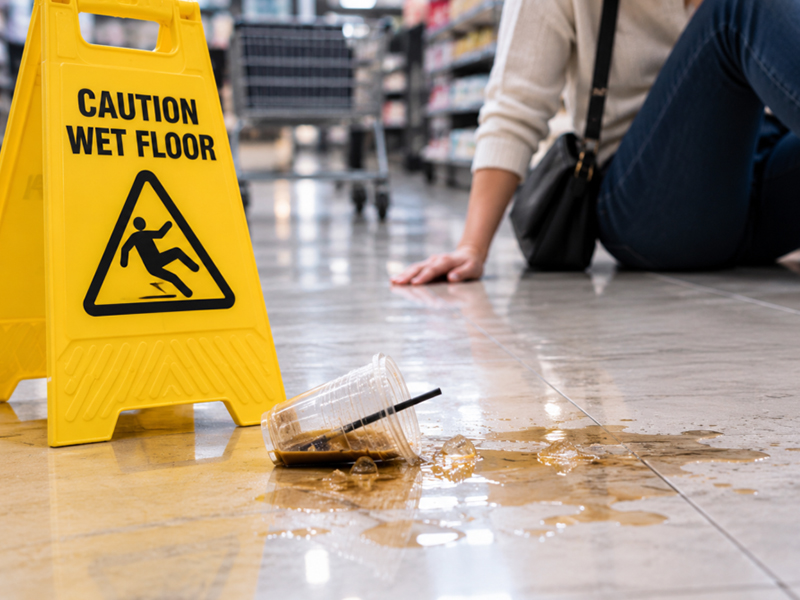
- Spilled liquids or food that were not cleaned up or marked within a reasonable time
- Recently mopped or waxed floors without adequate warning signs
- Damaged flooring, tile, or carpeting that was not repaired despite being a known issue
- Cluttered aisles or walkways obstructed by merchandise, boxes, or equipment
- Poor lighting in stairwells, stockrooms, or parking areas that made hazards difficult to see
- Broken or missing handrails on stairs used by customers or employees
- Uneven thresholds or entryway mats that create a tripping hazard
Evidence That Can Help Establish Responsibility
- Photos or video of the hazard and the surrounding area
- Surveillance footage from the business, if available
- An incident report completed by store management
- Names and contact information for witnesses, including other customers or employees
- Maintenance, inspection, or cleaning logs
- Medical records and bills documenting the injury
Steps to Take After a Fall at a Business
If you are injured in a fall at a store, restaurant, or other business in Pembroke Pines, consider the following:
- Report the fall to management before you leave, and ask for a copy of any incident report.
- Seek medical attention, even if your injuries seem minor at first.
- Photograph the hazard and the area around it, if you are able to do so safely.
- Get witness information from anyone who saw the fall or the condition that caused it.
- Avoid detailed statements about fault to store employees or insurance representatives until you understand your options.
- Keep records of medical treatment, bills, and any time missed from work.
How a Pembroke Pines Slip-and-Fall Lawyer Can Help
Identifying every party who may share responsibility for a fall at a business can require reviewing lease agreements, maintenance contracts, employee policies, and the specific facts of the accident. A Pembroke Pines slip-and-fall lawyer can help investigate the circumstances, identify potentially liable parties, gather evidence before it is lost or altered, and communicate with insurance companies on your behalf.
For a broader look at how premises liability claims work in Pembroke Pines, including how Florida law addresses hazardous conditions, see our related guide on when you can file a Pembroke Pines slip-and-fall lawyer.
Frequently Asked Questions
Can more than one party be responsible for a slip-and-fall at a business?
What if the business says it didn’t know about the hazard?
Does it matter if I was an employee rather than a customer?
What should I do if the business won’t give me an incident report?
Contact The Costello Law Group
Contact a slip and fall lawyer in Pembroke Pines at The Costello Law Group by calling (954) 591-8099 to discuss your situation